
The mailbox at the end of the driveway held more promise than any smartphone notification ever could. You would walk down that path, pull open the metal door, and feel your heart skip when you spotted a handwritten envelope mixed in with the bills. Someone had taken the time to sit down, pick up a pen, and think about you. That simple act meant everything.
The Ritual of Writing
Writing a letter was never something you rushed through. It started with finding the right paper. Maybe you had a box of stationery tucked away in your desk drawer. The paper might have had tiny flowers along the border or your initials embossed at the top. For everyday letters, a simple lined tablet worked just fine. But for special occasions, you pulled out the good stuff.
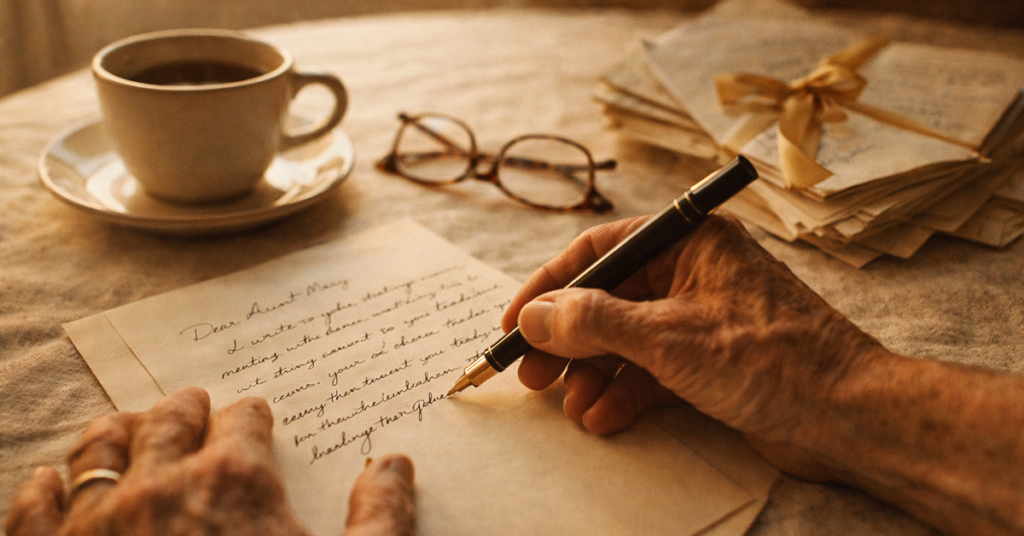
You would settle into your favorite chair or sit at the kitchen table after the dinner dishes were done. The house was quiet. The TV was off. It was just you, your pen, and your thoughts. You might start with “Dear” and the person’s name, then pause to figure out exactly what you wanted to say.
There was no backspace key. No delete button. If you made a mistake, you either crossed it out neatly or started over on a fresh sheet. This meant you actually thought before you wrote. You chose your words carefully. You considered how they might land on the other end.
The pen itself mattered too. Some people swore by blue ink. Others preferred black. A few adventurous souls used purple or green. And the way you wrote said something about you. Your handwriting was as unique as your fingerprint. Teachers spent years drilling cursive into your brain, and now those looping letters carried your personality across the miles.
Letters from Far Away
Military families understood the power of letters better than anyone. When your brother shipped off to Vietnam or your husband was stationed in Germany, those thin airmail envelopes became lifelines. You would recognize the handwriting on the front before you even saw the return address. Your hands might tremble a little as you opened it, grateful and relieved all at once.
The paper was often flimsy, almost translucent, because weight mattered when you were mailing something overseas. Every word counted. Soldiers would write about the weather, the food, the guys in their unit. They would ask about home, about the dog, about whether the car was running okay. What they wrote between the lines said even more.
Mothers saved every single one of those letters. They kept them in shoeboxes, tied with ribbons, tucked away in closets. Decades later, those boxes would resurface during a move or after someone passed. The paper had yellowed. The ink had faded a bit. But the love written on those pages remained as strong as ever.
College students kept the tradition going too. Once you left home for campus, letters from Mom arrived like clockwork. She would fill you in on neighborhood gossip, remind you to eat your vegetables, and slip a five dollar bill inside for emergencies. You would read those letters in your cramped dorm room and suddenly feel a little less homesick.
The Pen Pal Connection
Somewhere along the way, your teacher announced that your class would be getting pen pals. Maybe they lived in another state. Maybe they lived in another country entirely. You were assigned a name, an address, and an invitation to make a friend you might never meet in person.
That first letter was the hardest to write. What do you even say to a stranger? You started with the basics. Your name, your age, your favorite subjects in school. You described your town, your family, your hobbies. You asked questions and hoped they would write back.
When their response finally arrived, it felt like opening a present. Here was this person from somewhere completely different, and they wanted to know about your life. You learned about their pets, their siblings, their favorite foods. You discovered that kids in other places celebrated different holidays or played different games at recess.
Some pen pal relationships lasted years. Christmas cards went back and forth long into adulthood. A few people actually met their pen pals decades later and discovered that the friendship had been real all along, even though it existed only on paper.
Love Letters and Tender Words
There was a special category of letter that made your pulse race. Love letters carried weight that no text message could ever match. When someone took the time to write out their feelings by hand, you knew they meant every word.
Young couples separated by summer vacation would write to each other constantly. The letters might arrive every few days, fat envelopes stuffed with pages and pages of longing. You would read them over and over until you had memorized certain passages. The paper would get soft from all that handling.
Proposals sometimes came in letters. Declarations of devotion. Apologies and reconciliations. The most intimate conversations often happened on paper because writing gave you courage that speaking face to face did not. You could craft the perfect sentence, express the deepest feeling, and send it off before you lost your nerve.
Grandparents kept love letters from their courting days in dresser drawers. Those yellowed pages told stories of a young romance, full of hope and tenderness. Reading them felt like stepping into a time machine. The person who wrote those words was the same person who now sat in the recliner watching the evening news, but somehow also completely different.
The Mailman as Celebrity
Your mail carrier was practically a member of the family. You knew when to expect the truck. You knew the sound of it coming down the street. Kids would run to the mailbox the moment they heard that familiar rumble.
In small towns, the mailman knew everyone by name. He might wave hello or stop to chat about the weather. He watched kids grow up, noticed when someone was sick based on the get well cards piling up, and delivered both joy and heartbreak right to your door.
Birthday cards arrived on time because relatives planned ahead. Thank you notes went out promptly because your mother stood over you until they were done. Party invitations came in the mail, and RSVPs went back the same way. The postal system was woven into the fabric of daily life in a way that felt permanent and reliable.
A mailbox flag in the up position meant outgoing mail was waiting. You would place your stamped envelope inside, raise that flag, and trust that your words would reach their destination. It took a few days, maybe a week if you were sending something far away. But it would get there. That was the deal.
Waiting and Anticipation
Part of the magic was the waiting. You could not send a letter and expect an immediate response. Days would pass. Sometimes weeks. And in that waiting, something wonderful happened. You thought about the person you wrote to. You imagined them reading your words. You wondered how they would react.
When the reply finally came, it felt earned. The anticipation made the arrival sweeter. Unlike instant messages that arrive in seconds and get forgotten just as fast, letters were events. They demanded attention. They deserved a cup of coffee and a comfortable seat.
You also wrote differently when you knew days would pass before your words were read. You did not fire off quick reactions or say things in the heat of the moment. You had time to think, to reconsider, to be your best self on paper. Letters brought out thoughtfulness in ways that instant communication never could.
The Treasured Collection
Almost everyone had a box somewhere. It might have been a shoebox, a cedar chest, or a special drawer. Inside were letters that mattered too much to throw away. Birthday cards from Grandma with her shaky handwriting. Notes from your best friend in high school. The letter your dad wrote when you graduated.
These collections grew over the years. You added to them and rarely subtracted. Occasionally you would pull out the box and spend an afternoon reading through the past. The paper carried memories, yes, but it also carried something more. It held proof that you were loved, that you mattered, that people thought about you even when you were not in the room.
Some letters made you laugh. Others made you cry. A few made you cringe at old dramas that seemed so important at the time. But all of them connected you to the people who wrote them, even the ones who were no longer around.
A Lost Art Worth Remembering
The stamps cost more now. Fewer people have stationery in their desks. Handwriting has grown rusty from lack of practice. But something about a handwritten letter still carries power that technology cannot replicate.
When you held a letter, you held something the other person had touched. Their hand moved across that very paper. They chose those words just for you. In a world of copied, forwarded, mass-produced communication, a handwritten letter remained stubbornly, beautifully personal.
Those of us who grew up writing and receiving letters understand something important. We know that some things are worth the extra time and effort. We remember what it felt like to find that handwritten envelope in the mailbox. And somewhere, tucked away in a closet or dresser drawer, we probably still have the proof.