
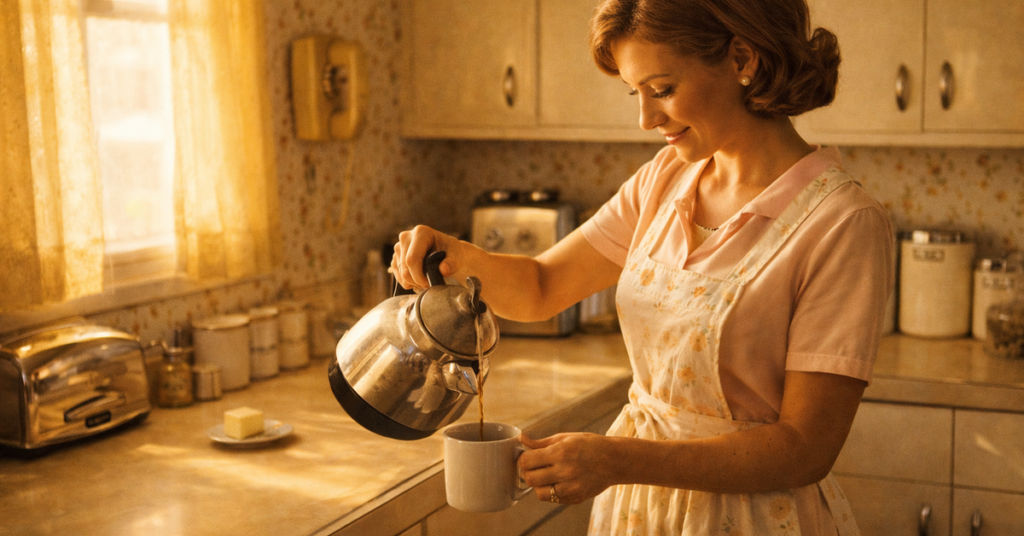
The alarm clock buzzes at 6:15 AM. Before your feet even hit the cold floor, you’re already running through the mental checklist. Lunches to pack. Breakfast to make. Laundry that won’t wash itself. This was the reality for millions of American women in the 1960s. And if your mom was one of them, you watched this daily performance from a front row seat.
Being a housewife in the 1960s wasn’t just a job. It was a full-time production that would make today’s project managers break into a cold sweat. No dishwashers in most homes. No microwaves. No wrinkle-free fabrics. Just a woman, her appliances, and a to-do list that never ended.
The Morning Rush
The day started before the sun came up in most households. Mom would slip out of bed, tie on her housecoat, and shuffle to the kitchen while everyone else slept. That first percolator of coffee wasn’t a luxury. It was survival fuel.
By the time you stumbled into the kitchen rubbing your eyes, breakfast was already on the table. We’re not talking about cereal poured from a box. Many moms made hot breakfasts every single morning. Scrambled eggs. Bacon sizzling in the cast iron skillet. Toast from actual bread that came unsliced. Orange juice squeezed by hand if your family was fancy.
Your dad sat at the head of the table reading the morning paper while mom refilled coffee cups and packed lunches into brown paper bags. She’d slip in a napkin with your name written on it. Maybe a note that said “Have a good day!” Those little touches meant everything.
The morning rush wasn’t complete until everyone was dressed, fed, and out the door. Mom stood at the screen door waving as the school bus pulled away. Then she turned around to face a kitchen that looked like a small tornado had passed through.
The Laundry Marathon
Monday was wash day in most American homes. And wash day was no joke.
If you were lucky, your mom had a wringer washer by the 1960s. She’d stand over that machine feeding clothes through the rollers while trying not to catch her fingers. The wringing sound became the soundtrack of your childhood. That rhythmic squeezing of water from fabric repeated hundreds of times each wash day.
The really lucky families had an automatic washer by the mid-1960s. But even then, the work wasn’t over. Every piece of clothing went through a separate routine. White clothes got bleached. Colors were sorted carefully. Delicates were washed by hand in the bathroom sink.
Then came the hanging. Clothesline after clothesline of sheets, shirts, pants, and underwear flapping in the backyard breeze. Your mom could tell the weather better than any forecaster. She had to. Getting caught with wet laundry when rain rolled in meant disaster.
The smell of line-dried sheets is something no dryer sheet has ever replicated. That fresh, sun-warmed scent followed you to bed every night. You probably didn’t appreciate it then. But you remember it now.
Ironing came next. And everything got ironed. Shirts, pants, pillowcases, handkerchiefs, tablecloths. Your dad’s work shirts alone could take an hour. Mom would set up the ironing board in front of the TV and watch her afternoon programs while pressing creases sharp enough to cut paper. The hiss of steam and the smell of hot cotton became as familiar as the furniture.
Grocery Shopping Without Modern Conveniences
Grocery day was an expedition that required planning, stamina, and a good pair of walking shoes.
There was no jumping in the car and running to the supermarket whenever you needed something. Most families shopped once a week. Your mom made lists organized by store aisle. She clipped coupons from the newspaper and organized them in envelopes. Every penny mattered when feeding a family on one income.
The grocery store itself was a different world. There were no scanners. Cashiers typed prices by hand or used those big mechanical cash registers that made satisfying “ka-ching” sounds. The checkout girl knew your name and asked about your family.
Mom chatted with neighbors between the canned goods and the bread aisle. The grocery store was as much a social hub as a shopping destination. News traveled through those aisles faster than any evening broadcast.
Carrying groceries home meant brown paper bags loaded into the station wagon. No plastic bags existed. Those heavy paper sacks required two trips from the car, minimum. Your job was to help unload and put away. Everything had its place, and mom knew exactly where every item belonged.
The Art of Dinner Preparation
Dinner preparation started after lunch. This wasn’t reheating leftovers or ordering takeout. This was real cooking from real ingredients that required real skill.
Meat came from the butcher counter. Your mom knew the butcher by name, and he knew exactly how she liked her roasts trimmed. Vegetables came fresh and required washing, peeling, and chopping. No pre-cut bags of salad. No frozen steam-in-bag sides. Just raw ingredients and a woman who knew how to transform them.
The kitchen became a symphony of sounds every afternoon. Pots bubbling. Knives hitting cutting boards. The oven door opening and closing. The sizzle of onions in butter. These sounds meant dinner was coming, and dinner was serious business.
Most families sat down together at 6:00 PM sharp. Dad home from work. Kids washed up and in their seats. No television during dinner in most households. Just conversation about the day while passing dishes around the table.
Your mom rarely sat down until everyone else was served. She’d pop up to refill glasses, grab forgotten condiments, or check on dessert. Her food was always the coldest on the table by the time she finally ate.
The Invisible Workload
What you didn’t see as a kid was everything that happened in between the big tasks.
Mom made beds with hospital corners every morning. She dusted furniture that would just get dusty again by tomorrow. She polished silver for Sunday dinners. She mended socks with holes rather than throwing them away. She let out hems on your pants as you grew taller. She sewed buttons back on shirts before anyone noticed they were loose.
She scheduled appointments and remembered birthdays. She wrote thank-you notes by hand. She kept the family calendar in her head without any smartphone reminders. She knew exactly when permission slips were due and never forgot picture day.
The mental load of running a household fell entirely on her shoulders. And she made it look effortless. The house was always clean when guests dropped by. Cookies appeared when you needed them for school bakes sales. Halloween costumes materialized from fabric scraps and creativity.
Nobody called it “work” back then. It was just what women did. But make no mistake. It was a full-time job with no vacation days, no sick leave, and no paycheck.
Evening Routines and Finally Sitting Down
After dinner came dishes. Mountains of dishes. No dishwasher meant standing at the sink with your hands in soapy water for half an hour or more. Your job might have been drying with a dish towel. The assembly line moved efficiently after years of practice.
Homework help came next. Mom sat at the kitchen table while you struggled through multiplication tables or book reports. She’d make hot cocoa on cold nights. She’d review your spelling words until you got every one right.
Baths were drawn. Pajamas were laid out. Stories were read. By 9:00 PM, the kids were in bed and the house was finally quiet.
That’s when mom finally sat down. Really sat down. Maybe she watched a program with dad. Maybe she worked on her knitting or flipped through a magazine. Maybe she just sat in the quiet and rested her feet for the first time since sunrise.
In a few hours, she’d do it all over again.
A Legacy of Love
Looking back now, you realize what you witnessed every day. Your mom ran a household with skills that would impress any CEO. She did it without complaint. She did it without recognition. She did it because she loved her family.
Those housewives of the 1960s taught us more than we knew at the time. They showed us what dedication looked like. They demonstrated that love isn’t just words. It’s action. It’s the hot breakfast on a cold morning. It’s the perfectly pressed shirt. It’s being there, every single day, holding everything together.
The world has changed since then. Roles have shifted. Options have expanded. But the memory of watching your mom move through her day remains. The smells, the sounds, the feeling of a home well-kept and a family well-loved.
That was no small thing. That was everything.